
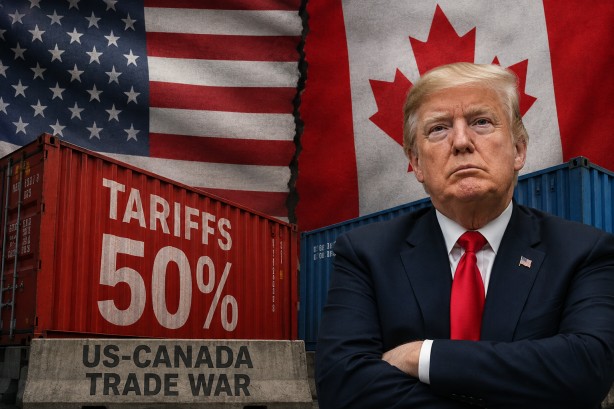
In a significant escalation of trade tensions, the United States has imposed a 50% tariff on approximately $20 billion worth of Canadian goods following unsuccessful negotiations between the two nations in Washington. The tariffs target a range of products, including hockey sticks and medical supplies, marking a sharp increase in the ongoing trade dispute.
Canadian Prime Minister Mark Carney has vowed a strong retaliatory response, promising to impose equivalent tariffs on U.S. goods starting September 8. Carney criticized the U.S. actions as an affront to Canada, rejecting the demands made during the failed talks. Meanwhile, U.S. Trade Representative Jamieson Greer defended the tariffs, arguing that they are essential for safeguarding American workers and supply chains.
This latest development has cast uncertainty over the future of the USMCA, the trade agreement that facilitates approximately $2 trillion in annual trade among the United States, Canada, and Mexico. The escalating dispute threatens to disrupt trade flows and could have wider economic implications for businesses and consumers in both countries.
The rising tensions highlight the fragility of economic relationships in North America, as both nations brace for potential economic repercussions. The imposition of tariffs and the promise of retaliatory measures are likely to increase costs, potentially impacting the price of goods and services across various sectors.
As the situation develops, all eyes will be on the potential for further negotiations and whether a resolution can be reached to prevent further economic strain. The continuation of the current trajectory could see the deepening of trade barriers and increased volatility in the cross-border economic partnership.