
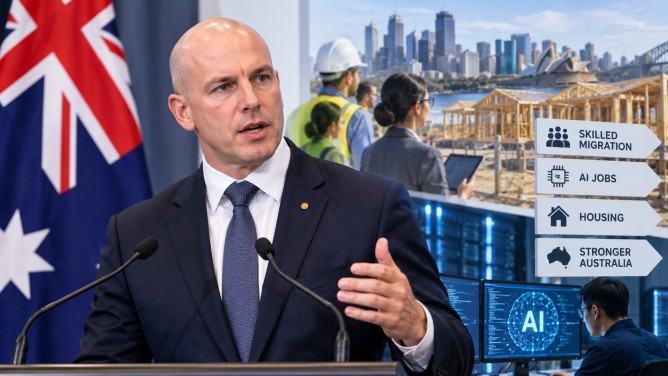
Senator David Pocock, an independent voice in Australia’s political landscape, is advocating for a shift in the country’s migration priorities, urging the government to place a greater emphasis on skilled migrants. This plea comes in the wake of looming labor shortages, particularly in sectors crucial to Australia’s future, such as artificial intelligence and housing. With a report from the Powering Skills Organisation highlighting the potential need for an additional 72,000 electricians and related tradespeople by 2030, Pocock’s call underscores the urgency of addressing workforce gaps in the face of expansive construction and infrastructure projects.
Pocock has raised questions about the current migration strategy, pointing out that skilled tradespeople are not receiving the attention they deserve in national planning. He argues that the current discourse around migration overly fixates on population totals without adequately considering the specific workforce needs essential for economic growth and development, especially in the housing sector where construction is lagging.
Beyond the immediate needs of the construction industry, Pocock has also expressed concerns about Australia’s readiness to handle the burgeoning demands of artificial intelligence infrastructure. He cautions that without securing tangible economic benefits, Australia might witness public resistance akin to that seen in the United States, where communities are pushing back against AI data centers. This resistance stems from fears that multinational tech giants may exploit local resources while minimizing their tax contributions.
In light of these challenges, Pocock is calling for the establishment of mechanisms to ensure Australia reaps sustained economic benefits from hosting large-scale data centers. As the demand for AI infrastructure is set to increase, he emphasizes the importance of creating a framework that not only attracts investment but also safeguards Australia’s long-term economic interests.