
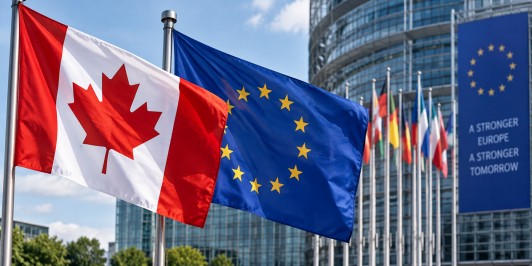
Amid escalating trade tensions with the United States, Canada is actively seeking to bolster its economic and strategic ties with the European Union. Prime Minister Mark Carney has engaged in discussions with leaders from France, Germany, and Italy to explore the possibility of forging closer relations with the EU, while stopping short of pursuing full membership. Canadian officials are considering an associate membership that would grant greater access to the EU’s single market.
The focus of this proposed collaboration is on strategic sectors such as energy, artificial intelligence, critical minerals, defense, technology, and infrastructure. Additionally, Canada is looking into strengthening partnerships in research, higher education, data centers, telecommunications, and satellite networks. A key component of this initiative is the potential expansion of energy links, which could involve infrastructure development to facilitate Canadian natural gas reaching European markets, thereby aiding in reducing Europe’s reliance on Russian energy.
This move underscores Canada’s commitment to diversifying its economy and minimizing its dependence on the United States, which currently accounts for approximately two-thirds of Canadian exports. By seeking to establish a more varied economic base, Canada aims to enhance its global trade footprint and mitigate the risks associated with over-reliance on a single trading partner.
European countries have shown a cautious interest in the proposals. While closer cooperation with Canada could open up new economic opportunities, it also poses the risk of further straining relations between Washington and its allies. The balance between fostering new economic partnerships and maintaining diplomatic harmony with the United States remains a delicate issue for the European Union as it considers Canada’s overtures.