
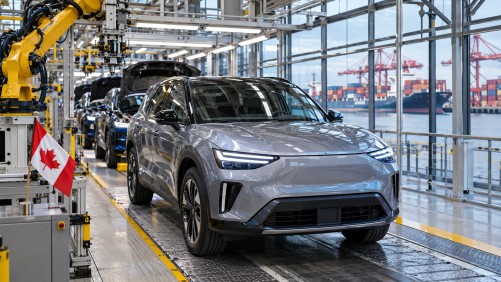
Canadian Prime Minister Mark Carney has announced that Canada is actively seeking new opportunities in Europe and Asia to bolster its automobile industry in light of rising trade tensions with the United States. This move comes as the U.S. administration considers imposing tariffs of up to 50% on Canadian automobiles, threatening the future of the integrated North American automotive market.
Carney emphasized Canada’s commitment to protecting jobs and ensuring long-term growth for its auto workers. Part of this strategy involves exploring alternative international trade partnerships to diversify Canada’s trade portfolio. In a significant development, Canada has secured an agreement with China to import up to 49,000 Chinese electric vehicles at a reduced tariff rate of 6.1%.
In addition to this agreement, Carney is expected to meet with Chinese President Xi Jinping to discuss bilateral trade relations and explore further opportunities for cooperation. These discussions aim to strengthen economic ties between Canada and China, potentially opening up new avenues for trade in the automotive sector.
While discussions with the U.S. over the future of Canada’s auto sector continue, the potential imposition of steep tariffs remains a pressing concern. The Canadian government is focused on mitigating these risks by establishing and expanding trade relationships with other global partners.
The pursuit of new markets in Europe and Asia reflects Canada’s broader strategy to reduce dependency on the U.S. market amid ongoing trade uncertainties. By diversifying its trade relationships, Canada aims to secure the stability and growth of its automobile industry and protect the interests of its workers.