
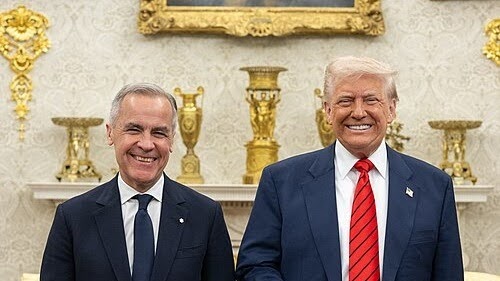
Canadian Prime Minister Mark Carney has dismissed the idea of expelling the U.S. ambassador after a diplomatic stir caused by President Donald Trump’s latest remarks labeling Canada as the “51st state.” Trump made this comment on social media while discussing Canada’s recent economic slowdown, and the U.S. ambassador amplified it by sharing the post on his official account. This action has sparked criticism among Canadians and reignited discussions about Trump’s frequent allusions to Canada.
Addressing the media, Carney reaffirmed Canada’s commitment to working with the U.S. administration despite these tensions. He highlighted the critical nature of the relationship with the United States, which stands as Canada’s most significant trading and security partner. Meanwhile, opposition leader Pierre Poilievre dismissed Trump’s comments as unrealistic, asserting that Canada would never become part of the United States. Poilievre stressed that the priority should remain on addressing the economic challenges confronting Canadian families.
The U.S. ambassador has previously sought to minimize concerns regarding Trump’s “51st state” remarks, urging Canadians to focus on collaborative opportunities between the two nations. Despite his stance, a public petition demanding his removal has gained traction, gathering thousands of signatures. This controversy unfolds amid ongoing trade discussions between Canadian officials and the United States, which include negotiations about the Canada-U.S.-Mexico free trade agreement.
Canadian leaders have expressed that Trump’s social media comments will not derail these critical negotiations or affect the broader scope of bilateral cooperation. The dialogue between the two countries continues to emphasize the importance of maintaining a strong partnership, especially in light of the intertwined economic and security interests shared by Canada and the United States.