
A new and detailed interpretation of Donald Trump’s H-1B visa policy has emerged, suggesting a radical departure from traditional immigration models. Scott Bessent has clarified that the former president’s recent comments about needing foreign talent were not a signal of a softer stance, but the foundation of a “knowledge transfer” strategy. This policy is designed to use foreign expertise as a temporary tool to upskill the domestic workforce.
The confusion began after Trump’s interview where he seemed to advocate for more skilled immigrants. He asserted that the US needs to “bring talent into the country,” a statement that seemed to contradict his administration’s previous hardline policies. He went further, noting that Americans lack “certain talents” and must be taught, particularly for specialized roles in manufacturing and defense.
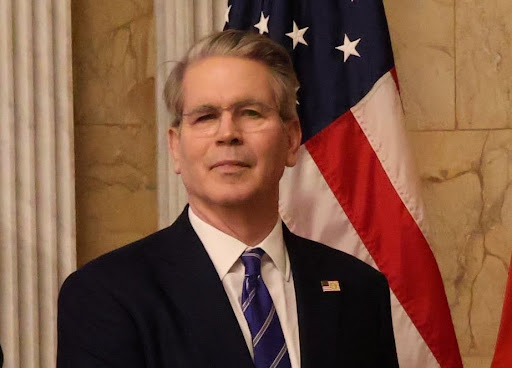
Bessent’s clarification, however, completely reframes this discussion. He stated that the policy’s goal is not to replace American workers but to have foreign experts train them. The idea is that skilled workers would come to the US specifically for this training purpose, empowering the American workforce rather than competing with it. This puts a new spin on Trump’s comments, suggesting they were about education, not replacement.
Detailing the plan, Bessent explained that foreign workers would be granted temporary visas, lasting perhaps three to seven years. Their mandate would be explicit: impart their specialized knowledge to their American colleagues. This temporary, educational-focused role is a stark contrast to the current H-1B program, which is often seen as a pathway to long-term employment and residency.
Bessent forcefully defended this “come, teach, leave” approach, calling it a “home run.” He pointed to critical industries like semiconductors and shipbuilding, where the US has a skills gap, arguing that Americans “can’t have that job, not yet.” This strategy, in his view, solves the problem by using foreign expertise to build a self-sufficient American workforce for the future, after which the foreign trainers would “return home.”
“Come, Teach, Leave”: Bessent Reveals Trump’s H-1B “Knowledge Transfer” Strategy
Picture Credit: commons.wikimedia.org
18