
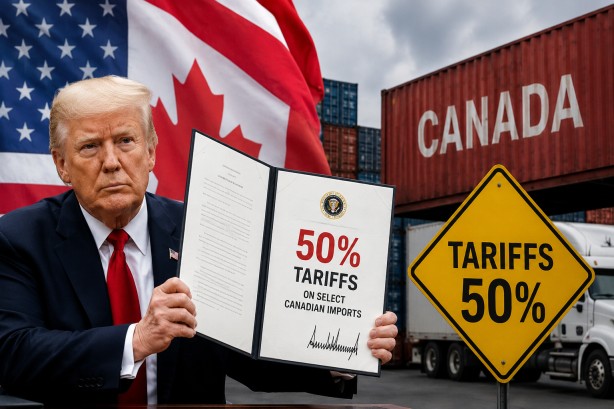
President Donald Trump has announced a new set of 50% tariffs on certain Canadian imports, citing what he claims to be Canada’s discriminatory practices against American products. This latest round of trade measures will impact a range of products, including automotive materials, dairy goods, and alcoholic beverages. The tariffs have been implemented through executive orders as part of ongoing trade discussions within the framework of the United States-Mexico-Canada Agreement (USMCA).
The Trump administration justifies these tariffs as a response to what it perceives as unfair trade practices that have adversely affected U.S. industries. By imposing these duties, the administration aims to address these imbalances and push for more equitable market access. The new tariffs are anticipated to have significant implications for the ongoing trade negotiations between the U.S. and Canada, potentially intensifying the dialogue over trade terms and conditions.
This move by Washington is likely to further strain the economic ties between the two neighboring countries. The imposition of tariffs could create additional hurdles for businesses and exporters who are already navigating the complexities of North American trade. Both American and Canadian businesses are keenly observing how Ottawa will respond and what further measures might be taken in this escalating trade tussle.
The introduction of these tariffs underscores the Trump administration’s broader trade policy strategy, which has focused on re-evaluating existing trade agreements and addressing perceived inequities. As trade discussions continue under the USMCA, this development adds a new layer of complexity to the bilateral relationship between the U.S. and Canada, with potential ramifications for industries on both sides of the border.