
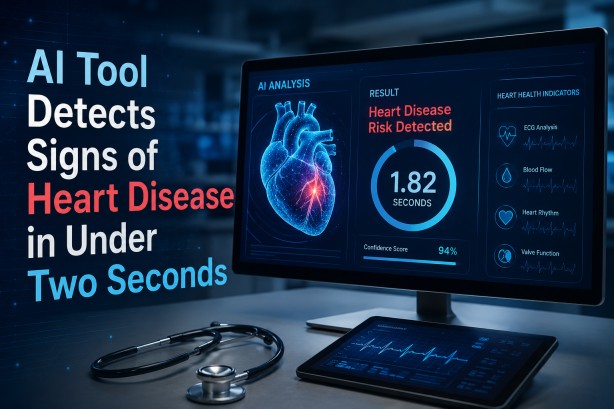
A groundbreaking artificial intelligence tool has been developed by doctors to swiftly analyze electrocardiograms (ECGs) and identify individuals at high risk for heart failure and heart valve disease. Capable of processing ECGs in under two seconds, this technology is a significant advancement in the early detection of cardiac conditions.
Trained on millions of ECGs, the AI is designed to uncover patterns that might not be apparent to physicians during standard assessments. In a substantial trial involving 67,000 patients across the United States, the AI demonstrated its efficacy by identifying up to 81% of heart failure cases and up to 90% of heart valve disease cases.
With approximately one billion ECGs performed globally each year, this AI tool could revolutionize how patients suspected of heart disease are managed. Typically, such patients require an echocardiogram, which often entails long wait times. Although the AI is not intended to make conclusive diagnoses, it can assist doctors in prioritizing high-risk patients for further testing, potentially expediting the commencement of treatments.
Moreover, researchers anticipate that this technology could be employed to analyze ECGs conducted for unrelated medical reasons, thus uncovering previously unnoticed heart conditions. This capability could broaden its utility within the healthcare system and aid in the early detection of cardiac issues.
The development team is also investigating the possibility of creating portable AI-powered ECG devices. Such devices could be used by healthcare professionals, enhancing the accessibility and speed of early cardiac condition detection, which could significantly impact patient outcomes.