
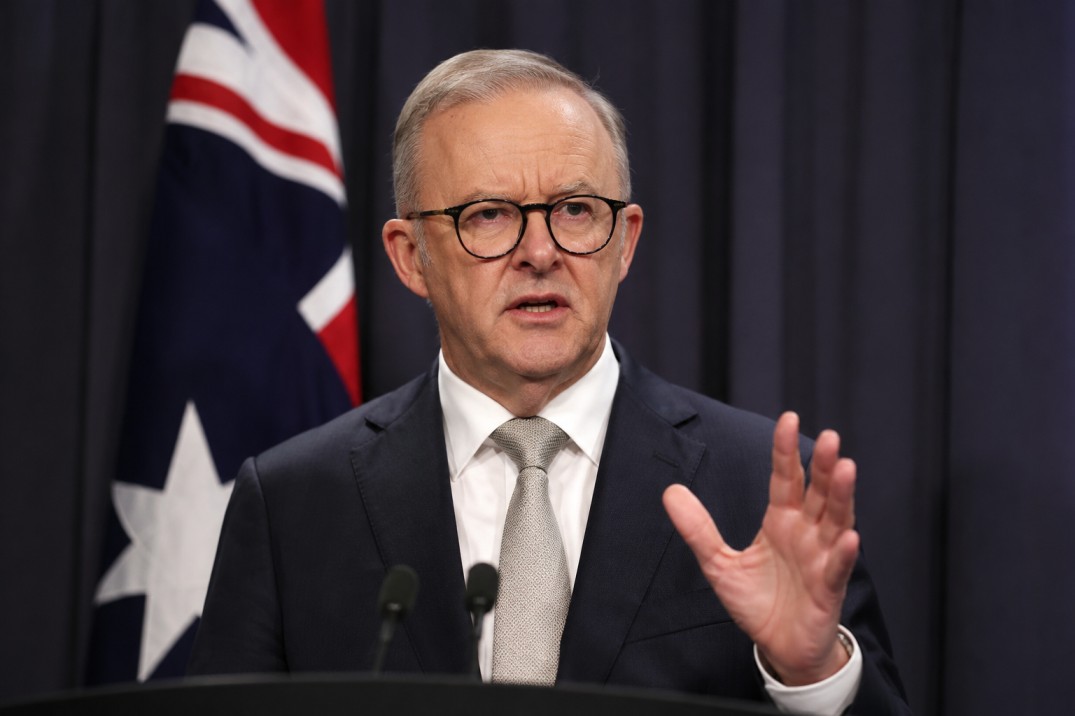
Australian Prime Minister Anthony Albanese has issued a stern rebuke to China following its recent test of a nuclear-capable intercontinental ballistic missile (ICBM) over the Pacific Ocean. He warned that such actions pose a significant threat to regional peace and stability. Albanese emphasized that the missile, which was launched from a nuclear-powered submarine carrying a dummy warhead, could cause immense destruction if armed with a nuclear payload. He reiterated the need for fewer nuclear weapons in the region and pledged that Australia would persist in voicing its concerns to Beijing.
During a visit to the Solomon Islands, Albanese labeled the missile test as a provocative act that could escalate instability across the Pacific. His sentiments were echoed by Solomon Islands Prime Minister Matthew Wale, who also condemned the launch. Wale called on major powers, including China and the United States, to refrain from conducting missile tests in the Pacific. He advocated for building partnerships with Pacific nations rather than creating security threats.
In response to the criticisms, China defended its actions, describing the missile launch as a routine military exercise conducted in line with international law. Beijing stated that neighboring countries were informed in advance and assured that the test was not directed at any particular nation. However, Australian officials dismissed this explanation, arguing that the notice provided was inadequate and did not meet the accepted international standards for ballistic missile notifications.
The missile test has drawn criticism from various countries, leading to increased concerns that the rise in military activities in the Indo-Pacific region could heighten tensions and spark a new phase of strategic competition. The situation underscores the growing unease over military maneuvers in the area, with calls for restraint and diplomacy to prevent further escalation.