
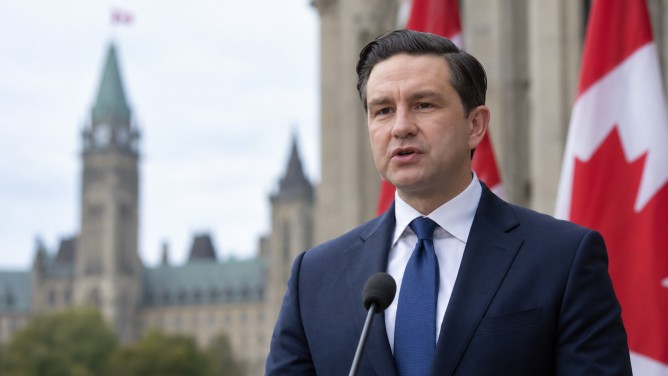
Canadian opposition leader Pierre Poilievre has firmly rejected the idea of Canada becoming an “associate member” of the European Union, a proposal recently backed by European Commission President Ursula von der Leyen. Speaking at a rally in Brantford, Ontario, Poilievre stated that Canada should not adopt European taxes, laws, or immigration policies, emphasizing that the country is not seeking to become “the 28th state of the European Union.”
Poilievre highlighted that Canada already enjoys a free trade agreement with Europe and maintains robust defense alliances through NATO, suggesting these existing ties are sufficient. His comments come amid discussions about deepening Canada’s partnership with Europe, a move that has garnered mixed reactions from Canadian political figures.
Prime Minister Mark Carney, on the other hand, has shown support for closer cooperation with European nations. He advocates for expanded opportunities for young Canadians and greater integration of financial services between the regions. Carney has assured that any proposed partnership will be subject to debate and a vote in the Canadian Parliament, ensuring that the decision undergoes a democratic process.
The proposal for Canada to become the EU’s first associate member is part of broader discussions about strengthening transatlantic relations. While proponents argue it could bring economic and cultural benefits, critics like Poilievre caution against potential compromises to national sovereignty.
The debate over Canada’s potential closer ties with the EU reflects broader questions about the country’s international alliances and the balance between maintaining sovereignty and engaging in global partnerships. As discussions continue, the Canadian government will weigh the potential impacts and benefits of such an association with Europe.