
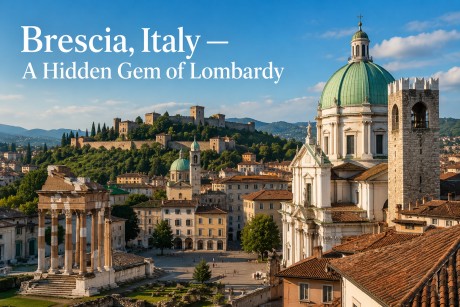
Nestled in northern Italy’s Lombardy region, Brescia offers visitors a captivating blend of history, culture, and culinary delights without the throngs of tourists often found in more famous Italian cities. Though frequently bypassed by travelers heading to Milan, Verona, Lake Garda, or the Dolomites, Brescia enchants with its historic districts, lively cafés, stunning churches, and significant Roman relics.
The city’s historic core, particularly the Carmine district, is known for its vibrant streets teeming with cafés, restaurants, and a lively local atmosphere. A focal point of Brescia is the Piazza della Loggia, renowned for its clock tower and elegant architectural design. This square also marks a poignant chapter in history, as it was the site of a 1974 bombing that claimed eight lives, reflecting the city’s complex political past of the 20th century.
Brescia’s cultural scene is rich with attractions such as the Teatro Grande, a prominent historic theater, and the Church of San Cristo, celebrated for its intricate interior decorations and murals. The city’s Roman past is particularly noteworthy, exemplified by the Brixia Roman archaeological area, which houses the remnants of an ancient temple complex. Additionally, the nearby Santa Giulia Museum boasts an extensive collection of historical artifacts, offering a window into the city’s storied past.
For food enthusiasts, Brescia is a culinary haven with its traditional dishes like casoncelli, a stuffed pasta typically served with butter and sage, and malfatti, a local variation of gnocchi. The surrounding Franciacorta region is a draw for wine lovers, famed for its sparkling wines produced in the vineyards south of Lake Iseo.
A short trip from Brescia leads to Lake Iseo and the charming island of Monte Isola, known for its breathtaking mountain views, traditional fishing communities, and opportunities to savor local crafts and cuisine. Visitors can meander through lakeside villages, witness traditional boatbuilding, and soak in the serene environment, a refreshing contrast to Italy’s busier tourist locales. Brescia seamlessly combines Roman history, Italian gastronomy, artistic heritage, and access to scenic countryside and lakes, making it an enticing destination for those seeking a quieter side of northern Italy.