
Few events in recent years have illustrated as vividly as Monday’s energy market turmoil how a single drone attack on a remote industrial facility can set in motion a chain of consequences that ultimately reaches the heating bills, petrol pumps, and household budgets of ordinary families thousands of miles away. The story of how a drone strike on Qatar’s Ras Laffan energy complex triggered one of the most dramatic single-day moves in global energy prices in years is a story about the extraordinary interconnectedness of the modern global energy system and the extraordinary vulnerability that interconnectedness creates.
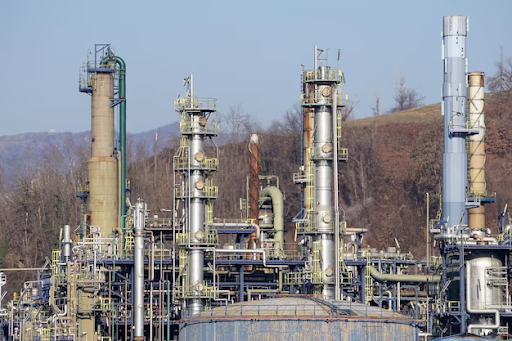
The story begins in Ras Laffan, a vast industrial city on the northeastern coast of Qatar that is home to one of the world’s largest concentrations of energy production and export infrastructure. The complex processes and liquefies natural gas extracted from the North Dome field, the largest natural gas reservoir in the world, shared between Qatar and Iran. From Ras Laffan, liquefied natural gas is loaded onto specially designed tankers and shipped to customers across Europe and Asia. The facility is, in short, one of the most strategically important pieces of energy infrastructure on the planet. When a drone attacked it on Saturday, and a second facility at Mesaieed was also struck, the Qatari state energy company had no choice but to suspend production entirely. Qatar’s defence ministry confirmed the attacks and reported no casualties, but the energy market consequences were immediate and severe.
The suspension of production at Ras Laffan sent the first shockwave through global energy markets when trading opened on Monday morning. Qatar is responsible for a share of global LNG supply large enough that its absence from the market is immediately felt everywhere. European benchmark gas prices surged 41% to 45 euros per megawatt hour. UK gas prices rose 40% to 110p a therm. Asian buyers who depend on Qatari LNG under long-term supply agreements were scrambling to identify alternative supplies in a spot market that was instantly much tighter and much more expensive. The price moves reflected both the direct loss of Qatari supply and the broader signal they sent about the scale and potentially prolonged nature of the disruption.
Simultaneously, events unfolding hundreds of miles away in the Strait of Hormuz were adding a second and equally severe layer to the crisis. Following US and Israeli military strikes on Iran over the weekend, Iran reportedly issued warnings to tankers that no vessels would be permitted to transit the narrow waterway that separates the Arabian Peninsula from the Iranian coast. Two commercial ships were attacked in the strait, one near Oman and another near the UAE. Marine tracking systems registered a dramatic build-up of tankers on both sides of the waterway, unable to proceed. Oil prices surged as much as 13% as the market digested the implications of the effective closure of the route through which one-fifth of global oil supplies normally flows. Brent crude briefly hit 82 dollars a barrel, a 14-month high, before settling at around 77 dollars as some initial panic unwound.
The consequences of these two simultaneous supply shocks radiated outward through every corner of the global economy on Monday. Stock markets fell across Europe, Asia, and the United States as investors assessed the economic damage. Airlines plummeted as flights were cancelled by the thousands and fuel costs surged. IAG fell 6% and easyJet dropped 4%. Defence stocks rose sharply as investors anticipated increased military spending, with BAE Systems gaining 5%. Oil companies BP and Shell each rose approximately 3% as the crude price surge boosted their earnings outlook. Gold climbed 2.5% to 5,408 dollars an ounce. In Tokyo, the Nikkei 225 fell nearly 2.4%. Major shipping company Maersk suspended transits through both the Strait of Hormuz and the Suez Canal. The International Maritime Organisation called for maximum caution. Fuel analysts warned that UK petrol prices could reach 150p per litre if oil hits 100 dollars a barrel. Energy experts warned that household energy bills could rise significantly. And at the end of this long chain of consequences, stretching from a drone attack on a Qatari gas facility to a heating bill in a home in Birmingham or Edinburgh, ordinary families were left to absorb the real human cost of a distant conflict playing out in the vital arteries of the global energy system.
From Ras Laffan to Your Heating Bill: The Full Story of Monday’s Energy Crisis
Picture Credit: www.freepik.com
22