
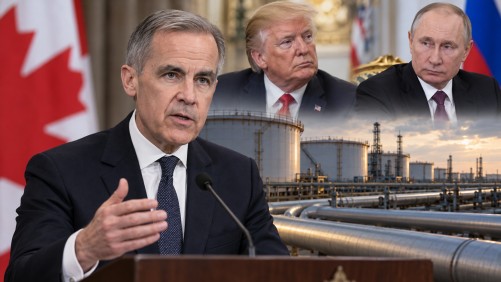
Canadian Prime Minister Mark Carney has expressed support for a proposed energy ceasefire between Russia and Ukraine, emphasizing its potential to de-escalate conflict and protect civilians. However, he criticized a recent U.S. agreement to import Russian diesel, warning it could provide Moscow with funds to continue its military actions against Ukraine.
U.S. President Donald Trump announced the energy ceasefire on Sunday, stating that both Russia and Ukraine had agreed to cease attacks on energy infrastructure, though details remain sparse. Ukrainian President Volodymyr Zelenskyy also welcomed the ceasefire but is seeking further clarification from the U.S. administration.
Carney’s concerns about the U.S. diesel deal stem from its potential to undermine peace efforts in the region. He argues that the agreement contradicts initiatives led by Canada, Ukraine, and their allies to establish stability in Europe. The Canadian government has also voiced worries that revenue from the deal could bolster Russia’s military campaign. Carney reaffirmed Canada’s commitment to strengthening sanctions against Russia if necessary.
President Trump has defended the diesel arrangement, citing its role in alleviating fuel-price pressures in the United States. Nonetheless, the deal has sparked debate about its alignment with existing restrictions on Russian energy imports imposed following Russia’s 2022 invasion of Ukraine. U.S. Republican Senator Thom Tillis has questioned the deal’s compliance with current laws, while Treasury Secretary Scott Bessent has stated that the administration would proceed under its legal authorities.
Meanwhile, Ukraine reports ongoing attacks on its energy infrastructure, with over 200 strikes on electricity and 17 on gas and oil facilities reported in the past week. Zelenskyy has urged Russia to cease these attacks and adhere to the proposed ceasefire. Furthermore, he discussed with Carney the enhancement of air defense systems, particularly against ballistic missiles, as winter approaches.
Canada is contributing to the development of the FREYJA anti-ballistic missile system with European partners, aiming to create an alternative to the U.S.-made Patriot system. Carney and Zelenskyy also explored closer coordination with European allies to meet Ukraine’s military and air defense needs, with EU leaders set to deliberate on Ukraine’s security and military funding in upcoming meetings.